
Tips for Rehoming and Screening Potential Adopters
The goal of rehoming is not just placement; it’s a lasting match. Taking a little time to screen potential adopters helps set both the cat and the adopter up for success. A conversation, either over the phone or during a meet and greet, is usually enough to get a clear picture. Focus on understanding their lifestyle, expectations, and ability to meet the cat’s needs.
Helpful Questions to Ask
- What are you looking for in a cat? What drew you to this one?
- Do you own or rent your home? If renting, are pets allowed?
- Who lives in the home (adults, children, etc.)?
- Are there any allergies in the household? What would you do if allergies develop?
- Do you have other pets? (species, age, personality, experience with cats)
- What is your home environment like (quiet, busy, frequently changing)?
- Do you travel often? What is your plan for pet care when you’re away?
- What experience do you have with cats?
- Will this cat be indoor-only or have outdoor access?
- Are you prepared for routine and unexpected veterinary expenses?
- How do you plan to handle nail care and scratching behavior?
- Are you ready to commit to a cat for their full lifespan (often 15–20 years)?
- Under what circumstances might you consider rehoming a pet?
These questions aren’t about “passing” or “failing.” They’re meant to open a conversation and ensure expectations are aligned.
Be Transparent
Honesty is one of the most important parts of a successful rehoming. Sharing complete and accurate information allows adopters to make informed decisions and reduces the likelihood of the cat being rehomed again.
- Why the cat is being rehomed
- Medical history (provide veterinary records whenever possible)
- Feeding routine and preferred food
- Litter box habits and litter type
- Scratching preferences (posts, cardboard, furniture, etc.)
- Personality, likes, and dislikes
- Daily routine and lifestyle
- Any known behavioral patterns or challenges
Even small details can make a big difference in helping a cat settle into their new home.
Supporting a Smooth Transition
A new environment can be overwhelming for a cat. Setting clear expectations and providing guidance to the adopter can make the transition much smoother. Encourage adopters to take things slowly and use a gradual introduction process.
Focus on the areas most relevant to this cat:
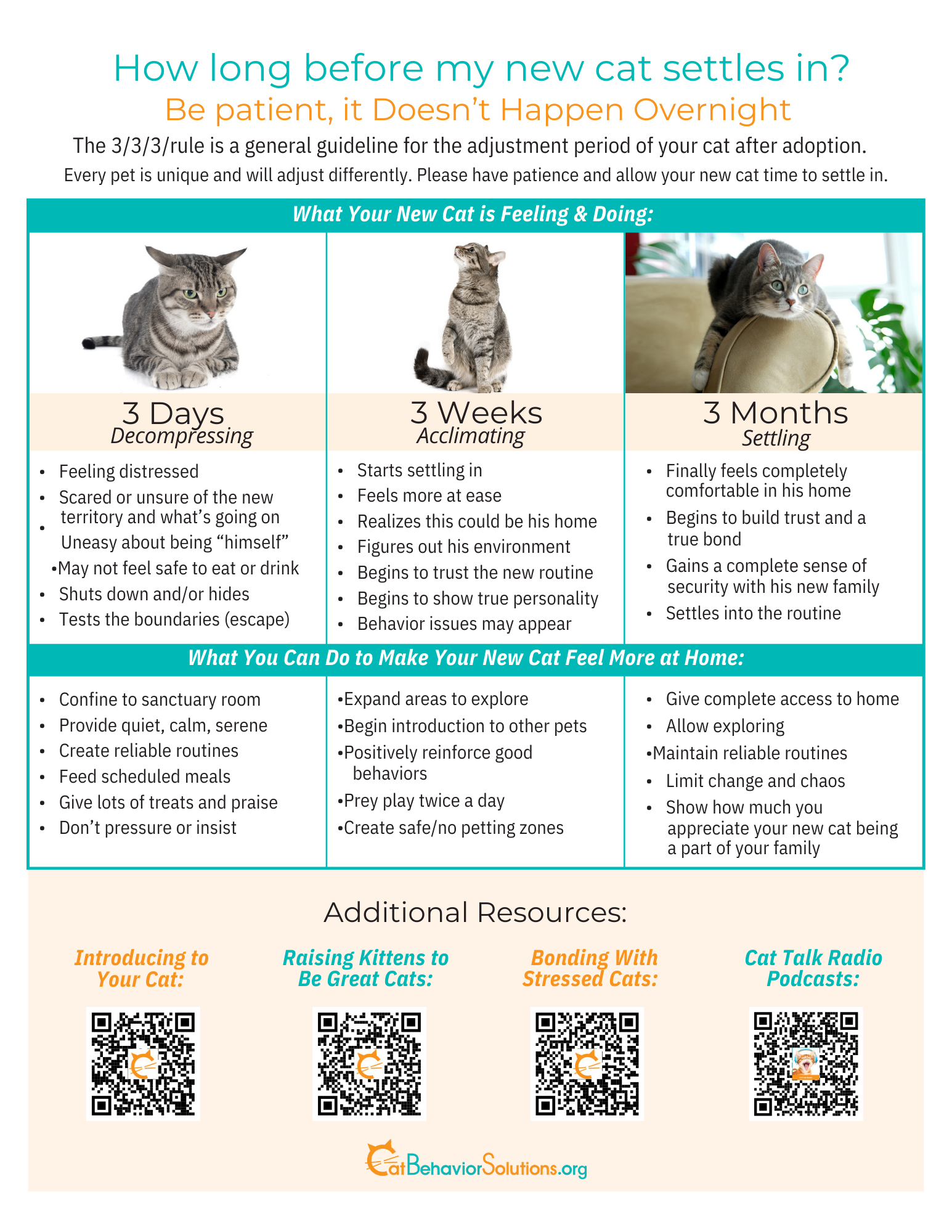
- Adjustment and decompression time (3-3-3 Rule)
- Safe introduction to the home (basecamp setup)
- Introductions to other pets (if applicable)
- Litter box habits and setup
- Scratching and enrichment needs
- Feeding routine and consistency
You can also direct them to our educational resources for step-by-step guidance: https://simplycats.org/resources/educational-information
Need support?
Contact us at info@simplycats.org.
Microchip Information
A microchip is a small chip implanted just under your cat’s skin, usually between the shoulder blades. It contains a unique identification number that is linked to your contact information through a microchip registry. Veterinary clinics and animal shelters can scan the chip to identify your cat and help reunite lost pets with their owners.
All cats adopted from Simply Cats are microchipped and registered at the time of adoption.
Please note: A microchip is not a GPS tracker and does not show your cat’s location. It is a permanent form of identification only.
Simply Cats Alumni Microchips
Cats adopted from Simply Cats are microchipped through 24PetWatch, now connected with PetPlace.
You can use their registry to update your contact information and report your cat as lost if needed.
Phone: 1-866-597-2424
Website: www.petplace.com
When Should You Update Your Microchip Information?
A microchip only works if the information connected to it is accurate. To ensure your cat can always find its way back to you, update your cat’s microchip record anytime you:
- Move to a new address
- Change your phone number
- Change your email address
- Privately rehome your cat
- Need to update emergency contact information
Not Sure Which Microchip Company Your Cat Is Registered With?
If you don’t know your cat’s microchip number or the company it is registered with, contact the veterinary clinic, shelter, or rescue where you adopted your cat.
If you have the microchip number but are unsure which registry manages it, use the AAHA Microchip Registry Lookup Tool.
If Your Cat Is Lost
If your cat goes missing, follow the steps in our Lost or Found Cat guide, which includes reporting your cat as lost through the microchip registry and verifying your contact information.
If your cat is found and scanned, the microchip can help connect them back to you.
If you’ve adopted your cat from Simply Cats and have questions about your cat’s microchip, contact us at
adoptions@simplycats.org.
Senior Cat Care
Senior cats often need adjustments in their environment as they age. Just like people, older cats may experience arthritis, vision or hearing changes, altered sleep and eating patterns, decreased grooming, and reduced ability to regulate body temperature. Small modifications at home can make a significant difference in their comfort and quality of life.
Mobility & Arthritis Support
Arthritis is extremely common in senior cats. It may cause stiffness alone or stiffness with pain. Cats most often develop arthritis in the lower spine, hips, elbows, and knees, though any joint can be affected.
Early signs may include:
- Stiffness after resting
- Hesitation before jumping
- Using alternative routes to reach favorite spots
- Intermittent limping
- Reduced grooming of the back or hips
Gentle, regular movement helps prevent worsening stiffness. Consider:
- Pet stairs or ramps with good traction
- Lowering favorite resting spots
- Adding soft, supportive bedding
- Rearranging furniture to reduce jumping distance
If you suspect arthritis, consult your veterinarian. Joint supplements and prescription pain medications significantly improve comfort and mobility.
Resource Placement
Make sure food, water, and litter boxes are easily accessible. A litter box located up or down a full flight of stairs may become difficult for an aging cat.
- Place at least one litter box on the level where your cat spends most of their time.
- Use large, low-entry litter boxes if stepping over high sides becomes difficult.
- Keep resources in quiet, predictable locations.
Nutrition & Hydration
Older cats often eat smaller amounts at each sitting. Offering multiple small meals throughout the day can help maintain calorie intake.
Senior cats are also more prone to dehydration. Providing several water stations and feeding moisture-rich canned food can help support hydration and kidney health. If you notice weight loss, appetite changes, or increased thirst, consult your veterinarian.
Vision & Hearing Changes
Many senior cats experience mild vision changes or hearing loss as they age. These changes are not typically painful but can make cats easier to startle.
- Add night lights in darker hallways.
- Approach gently from the front or allow your cat to sense vibrations before touching them.
- Avoid sudden movements or loud noises when possible.
Warmth & Comfort
Senior cats often sleep more and may lose muscle mass, making it harder to maintain body heat.
- Provide soft, warm resting areas.
- Use heated pet beds designed specifically for animals.
- Avoid relying solely on fireplaces or vents, which provide inconsistent warmth.
Grooming & Nail Care
As flexibility decreases, grooming may become difficult. You may notice a dull coat or small mats forming.
- Brush gently and regularly to remove loose fur.
- Check for mats, especially along the lower back.
- Trim nails more frequently, as reduced activity can lead to overgrowth.
Small environmental adjustments can dramatically improve comfort and mobility for senior cats. If you observe sudden behavior changes, weight loss, decreased appetite, or reduced mobility, consult your veterinarian.
Need support?
Contact us at info@simplycats.org.
Adjustment Period After Adoption
Bringing a new cat home is a big transition for both of you. Adjustment takes time, and it’s normal to see changes in behavior as your cat learns that your home is safe. The 3-3-3 guideline below offers a general framework for what many cats experience during their first days, weeks, and months.
Need support?
Contact us at info@simplycats.org.