△ MENU/TOP △

Donate

Rehome a Cat

Adopting a New Cat

Home  /  Resources  /  Education  /  Adopting a New Cat (current page)

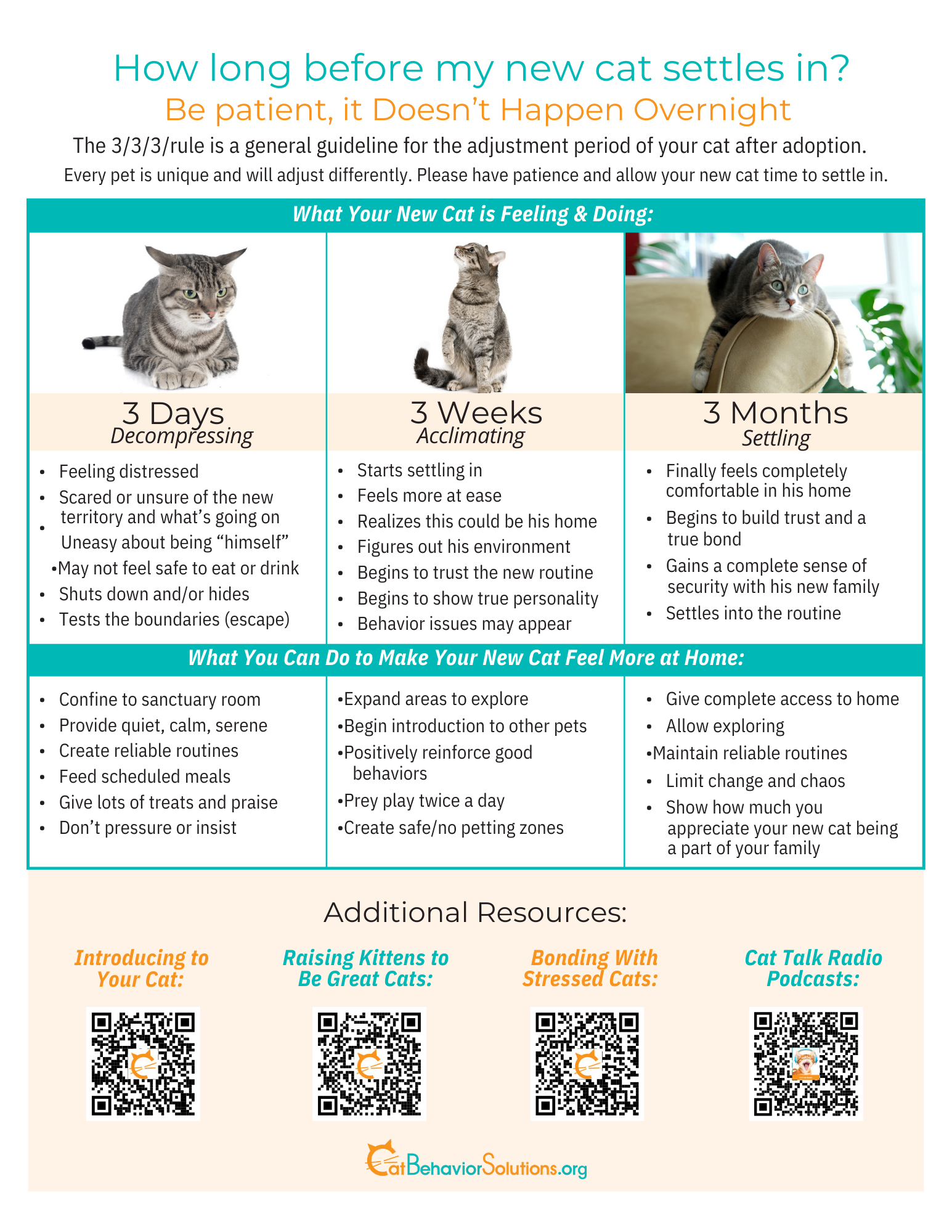
Adjustment Period After Adoption

Bringing a new cat home is a big transition for both of you. Adjustment takes time, and it’s normal to see changes in behavior as your cat learns that your home is safe. The 3-3-3 guideline below offers a general framework for what many cats experience during their first days, weeks, and months.
Need support?
Contact us at info@simplycats.org.

Adopting Kittens in Pairs

Kittens are active, social learners during a critical developmental window. Adopting two kittens together, or placing a kitten into a home with a compatible young cat, can significantly support healthy emotional and behavioral development.

At Simply Cats, we advocate for kittens to be adopted in pairs or into homes with a playful, appropriately matched feline companion. Research and guidance from feline behaviorists and veterinary professionals consistently show that kittens develop best with another kitten.

Why Two Kittens?

1. Built-In Mental & Physical Enrichment

Kittens are wired for constant movement and exploration. Even the most dedicated owner cannot replicate the amount of play, wrestling, chasing, and interactive learning that two kittens naturally provide each other.

A same-age playmate:

  • Provides continuous stimulation
  • Encourages healthy exercise
  • Reduces boredom-related behaviors
  • Supports appropriate predatory play

This built-in enrichment can reduce the likelihood of destructive behavior and inappropriate play directed toward people.

2. Healthy Social Development

Kittens learn important social skills from one another. Through play and interaction, they learn:

  • How hard is “too hard” during play
  • How to read body language
  • How to respect boundaries
  • How to groom and share space

These early lessons often result in more socially appropriate adult cats and may make future introductions easier.

3. Reduced Play-Aggression Toward People

Single kittens often direct their normal high-energy play behaviors toward human hands, feet, and older pets. A kitten companion helps redirect that rough-and-tumble play appropriately toward another kitten.

4. Smoother Integration with Older Pets

If you have an older cat or dog, adopting two kittens can reduce pressure on the resident pet. The kittens can focus their high-energy play on each other instead of overwhelming the older animal.

5. Increased Confidence & Emotional Security

The transition to a new home is a major change. Having a familiar companion can provide comfort and confidence, especially for more timid kittens.

6. Twice the Impact

Adopting two kittens saves two lives and opens space for more cats in need.

Important Considerations

  • Ensure you are financially prepared for food, preventive care, and future medical expenses for two cats.
  • Provide an adequate number of resources: one litter box per cat, plus one extra, sufficient vertical space, scratching areas, and resting spots to prevent competition.

While not every household is suited for two kittens, many families find that adopting a pair is not more work, just more joy.


Need support?
Contact us at info@simplycats.org.

Shopping List for Your New Cat

Preparing your home in advance helps your new cat transition more smoothly and reduces stress during the first few days. Having essential supplies ready ensures you can focus on building trust and establishing a routine from the moment your cat arrives.

Essential Supplies

☐ Metal or non-porous food and water dishes
☐ Original food currently being fed (continue for 7–14 days before transitioning)
☐ New desired food (introduce gradually)
☐ Large litter boxes (one per cat + one extra; at least 1.5× your cat’s length; one on each level)
☐ Unscented, clay clumping litter
☐ Litter scoop
☐ Hard-sided carrier (with both front and top-loading doors)
☐ Tall scratching posts (tall enough for a full stretch)
☐ Cat tree (for vertical space)
☐ Interactive toys
☐ Bed
☐ Brush
☐ Nail trimmer

Optional But Recommended Supplies for a Smooth Transition

☐ Enzymatic cleaner (for accidents during adjustment) 
☐ High-value treats (lickable treats, freeze-dried meat, plain cooked chicken, sardines in water) 
☐ Feline pheromone diffuser (such as Feliway®)
☐ Baby gate (for slow introductions to other pets) 


Need support?
Contact us at info@simplycats.org.

Indoor vs Outdoor Lifestyles

Understanding how cats are wired helps us make thoughtful decisions about their care and environment.

Understanding Cats as a Species

  • Cats are obligate carnivores and must eat meat. It is a biological necessity.
  • Cats play the way they hunt. Stalking, chasing, pouncing, grabbing, and “bunny kicking” are all natural predatory behaviors.
  • Cats have highly developed senses. A cat’s whiskers, vision, hearing, smell, toe pads, and tongue all provide critical environmental feedback.
  • Cats are built for movement. Cats have powerful muscles designed for climbing, sprinting, and jumping.
  • Cats are crepuscular, meaning they are most active at dawn and dusk.
  • Cats are control-oriented. They have a strong innate need to feel safe and in control of their environment.


Lifestyle Options

Cats can live in a variety of environments. Each option carries benefits and risks. The goal is to balance safety with appropriate enrichment.

Indoor Only

The cat lives entirely indoors and does not have access to the outdoors.

  • Benefits: Lowest risk for infectious disease, parasites, and trauma.
  • Risks: Boredom, obesity, muscle loss, stress-related illness, or behavior concerns.

Indoor with Supervised or Protected Outdoor Access

The cat lives primarily indoors but has supervised or protected outdoor time, such as on a harness and leash or in an enclosed catio.

  • Benefits: Increased stimulation and exercise while maintaining safety.
  • Risks: Slightly increased exposure to parasites or disease, depending on setup.

Indoor/Outdoor (Unrestricted Access)

The cat has unrestricted outdoor access, either by being let out or through a pet door.

  • Benefits: High stimulation and autonomy.
  • Risks: Increased risk of infectious disease, parasites, injury, wildlife conflict, and trauma.

Outdoor Only

The cat lives exclusively outdoors and does not reside inside a home with people.

  • Benefits: High environmental stimulation.
  • Risks: Highest risk category for disease, parasites, injury, and shortened lifespan.

Key Takeaway

Cats thrive when their biological needs are met, and their safety is prioritized. If a cat lives primarily indoors, enrichment is essential. If outdoor access is provided, risk mitigation is essential.

Simply Cats Adoption Policy

Simply Cats requires adopted cats to live indoors. Outdoor access must be supervised or fully enclosed, such as a secure catio or harness walk.

Standard backyard fencing is not considered protected access. Cats can climb wood, metal, or vinyl fences, dig underneath, or slip through small openings.

Unrestricted outdoor access increases the risk of injury, infectious disease, parasites, wildlife conflict, vehicle trauma, toxins, and human harm. On average, indoor cats live substantially longer than cats with unrestricted outdoor access.

Our goal is to support safe, enriched indoor lives that meet cats’ biological and behavioral needs while protecting their health and longevity.


Need support?
Contact us at info@simplycats.org.

Introducing Your New Cat to a Dog

Introducing a new cat to a resident dog takes time. Gradual, structured introductions help prevent fear, chasing, and long-term tension.

Move Slowly

Never allow a dog and cat to immediately “work it out.” Sudden introductions can create fear or trigger chasing behavior.

The introduction process may take several days or several weeks. You can never go too slow. Short-term patience creates better long-term harmony.

Move to the next step only when both animals are calm and responding neutrally or positively at the current stage. Progress is based on behavior, not a timeline.

Consider using synthetic feline pheromone diffusers (such as Feliway®) throughout the home during the introduction process. These products mimic natural calming facial pheromones and may help some cats feel more secure during periods of change.

Step 1: Use a Base Camp

Start your new cat in a separate room with a litter box, food, water, scratching surface, bed, toys, and items that smell like you.

A smaller, predictable space reduces overwhelm and helps your cat build confidence before meeting other pets.

Step 2. Feeding at the Door

Feed the cat and the dog on opposite sides of the closed base camp door. This helps them associate each other’s scent with something positive. Gradually move food bowls closer to the door as long as both animals remain calm.

Step 3: Scent Swapping

Before face-to-face meetings, allow each animal to become familiar with the other’s scent.

Swap bedding between the cat and dog and rotate access to rooms so each animal can explore the other’s space without direct contact.

Step 4: Controlled Visual Introductions

Once both animals are comfortable with scent exposure, allow brief visual contact. Keep the dog on a leash and allow the cat freedom to move and access elevated escape routes.

Keep sessions short and positive. Reward the dog for calm behavior and disengagement. Offer treats to the cat if she remains relaxed.

End sessions before either animal becomes overwhelmed.

Step 5: Supervised Interaction

When both animals remain calm during visual sessions, allow short, supervised interactions. Keep the dog leashed initially and continue reinforcing calm responses.

It is normal for cats to vocalize, hiss, or show mild hesitation. Dogs may bark. Avoid intervening unless there is chasing or escalating aggression. If tension rises, calmly separate and try again later.

Do not leave them alone together until they have demonstrated consistent calm behavior over time.

If a Physical Fight Occurs

Do not use your hands to separate fighting animals.

Instead, calmly block their visual access using a blanket, large piece of cardboard, or a similar barrier placed between them. This often disrupts the interaction long enough to safely separate them. Return the cat to base camp and allow both animals to settle before attempting another session.

Do not punish either animal. Punishment creates fear and negative associations, which can delay progress.

Key Takeaway

Successful introductions are gradual and structured. Positive associations, scent familiarity, and short, calm sessions increase the likelihood of long-term harmony.


Need support?
Contact us at info@simplycats.org.

Introducing Your New Cat to Other Cats

Introducing a new cat to a resident pet takes time. Cats are territorial and vary widely in sociability, so gradual introductions are essential for long-term success.

Move Slowly

Never place cats together and “let them work it out.” Sudden introductions can lead to fear, injury, and long-term conflict.

The introduction process may take a few days, several weeks, or even longer. You can never go too slow. Short-term patience creates better long-term harmony.

Move to the next step only when both cats are calm, eating, and responding neutrally or positively at the current stage. Progress is based on behavior, not a timeline.

Consider using synthetic feline pheromone diffusers (such as Feliway®) throughout the home during the introduction process. These products mimic natural calming facial pheromones and may help some cats feel more secure during periods of change.

Use a Base Camp

Start your new cat in a quiet, enclosed room rather than giving access to the entire home. Provide a litter box, food and water, a cozy hiding spot, scratching surface, toys, and something that smells like you.

A smaller, predictable space reduces overwhelm and helps your cat build confidence before meeting other pets.

Feeding at the Door

Feed the resident cat and the new cat on opposite sides of the closed base camp door. This helps them associate each other’s scent with something positive. Gradually move food bowls closer to the door as long as both cats remain calm.

Spend time with the new cat, but continue giving attention to your resident cat to prevent jealousy or stress.

Scent Swapping

Before face-to-face meetings, help the cats become familiar with each other’s scent.

Swap bedding between cats. Gently rub a cloth along one cat’s cheeks and place it near the other cat’s food dish. Rotate access to rooms so each cat can explore the other’s space without direct contact.

Smell is more important than sight to cats. Scent familiarity reduces tension during later meetings.

Controlled Visual Introductions

Once both cats are eating and behaving calmly near the door, begin brief visual introductions. Use a baby gate or a slightly cracked door to allow them to see each other safely.

Keep sessions short and positive. Offer treats, toys, or gentle praise so they associate each other’s presence with good experiences.

Supervised Face-to-Face Meetings

When both cats remain calm during visual sessions, allow short, supervised interactions. Keep sessions brief and end them before tension escalates.

It is normal for cats to vocalize, hiss, or show mild hesitation. Avoid intervening unless there is escalating aggression. If tension rises, calmly separate and try again later.

If a Physical Fight Occurs

Do not use your hands to separate fighting cats.

Instead, calmly block their visual access using a blanket, large piece of cardboard, or a similar barrier placed between them. This often disrupts the interaction long enough to safely separate them.

Do not punish either cat. Punishment creates fear and negative associations, which can delay progress.

Key Takeaway

Successful introductions are gradual and structured. Positive associations, scent familiarity, and short, calm sessions increase the likelihood of long-term harmony.


Need support?
Contact us at info@simplycats.org.

Teaching Kids How to Interact With Cats

When bringing home a cat or kitten, it’s important to teach kids how to approach and interact
appropriately with their new pet. As a team, with you leading by example, your family can work
together to create a successful relationship and environment with your newest family member!

Adopt as a Family

Whenever possible, have all family members spend time with a prospective cat before adoption. This helps ensure the cat is comfortable with each child and gives everyone an opportunity to practice calm, respectful interaction.

Create a Cat-Friendly Environment

Cats need two things in family homes: the ability to escape and access to kid-free zones.

Provide vertical escape routes. Cats prefer to move away from conflict rather than engage in it. Cat trees, shelves, or elevated perches allow them to observe household activity without being in the center of it. Multiple escape options greatly reduce the chance of unwanted encounters.

Protect essential resources. Sleeping areas, feeding stations, and litter boxes should be located where children cannot startle or corner the cat. Litter boxes should be placed in rooms that are off-limits to young children, such as behind a baby gate.

A covered litter box does not create safety and may make a cat feel trapped.

Teaching Children How to Interact

Give your cat time to settle into the home before introducing additional people.

  • Approach slowly and speak softly.
  • Bend or sit down rather than looming over the cat.
  • Allow the cat to sniff before attempting to pet.
  • Offer treats on the floor or from an open palm if the cat appears calm and interested.
  • Teach children to recognize body language. A swishing tail, flattened ears, tense posture, or attempts to move away are signs the cat needs space.
  • Supervise all interactions until you are confident both the child and the cat are comfortable.

Shared Responsibility

Children can help with feeding, play, and simple care tasks, but adults remain responsible for ensuring that pets receive consistent food, water, enrichment, and medical care.

As children grow and schedules change, pet care should never be left entirely to a child.

Monitor Health and Behavior

If a normally tolerant cat becomes irritable, reactive, or avoids interaction, schedule a veterinary exam. Cats in pain are more likely to react defensively when touched.

Behavior changes may signal underlying medical concerns such as dental pain, abscesses, urinary issues, or injury and should always be evaluated.

Key Takeaway

Cats and children can form wonderful bonds when interactions are respectful and supervised. Providing escape routes, protected resources, and choice helps your cat feel safe and confident in a busy home.


Need support?
Contact us at info@simplycats.org.

Common Post-Adoption Concerns

Mild appetite changes, digestive upset, or cold-like symptoms are common during the first days after adoption. Most are stress-related and improve with time and supportive care.

Not Eating

One of the most common concerns after adoption is a decreased appetite. This is especially common in adult cats and those who are shy or timid.

In the short term, not eating for 1–2 days is usually not harmful. Cats can safely skip a day or two without lasting effects. However, overweight cats and young kittens are at higher risk if they stop eating and should be monitored more closely.

To encourage eating:

  • Bring food to them. Place food and water close to where your cat is resting or hiding so they don’t have to leave their safe space.
  • Offer variety. Try canned and dry foods, as well as treats. Small amounts of plain cooked meat or fish (no seasoning, breading, lunchmeat, or fried foods), unflavored yogurt, meat baby food, small pieces of cheese, sardines packed in water, or a cooked egg may help stimulate interest.
  • Use toppers. Sprinkle a probiotic powder such as FortiFlora on top of food to increase palatability.
  • Warm the food. Slightly warming canned food or adding hot water can enhance smell and encourage eating.
  • Support hydration. Liquid supplements such as HydraCare can help increase fluid intake during the transition period.

Contact your veterinarian if you cat has not eaten anything for 3 days after adoption.

Diarrhea/Soft Stool

Diarrhea, ranging from soft to fully liquid stools, is common after adoption and is often related to diet changes, schedule changes, or stress from a new environment. A small amount of fresh blood on the outside of a normal stool can also occur with stress.

If your cat has diarrhea but is eating well and acting normally, you can safely monitor at home for a few days.

Ease the Transition

Keep food consistent at first. Most cats at Simply Cats are accustomed to a combination of Nutrisource & Fancy Feast wet food and Nutrisource dry food. We recommend maintaining a similar feeding routine for the first week before making gradual changes.

If you’d like to transition your cat to a new diet, follow this plan during their second week:

  • Days 1–3: 75% current food, 25% new food
  • Days 4–7: 50% current food, 50% new food
  • Days 8–14: 25% current food, 75% new food
  • Days 15+: 100% new food

Maintain a predictable schedule. Feeding at consistent times each day helps reduce stress-related digestive upset.

Contact your veterinarian if:

  • There is no gradual improvement.
  • Your cat stops eating.
  • Vomiting or lethargy develops.
  • Diarrhea is completely liquid for more than 24 hours.
Upper Respiratory Symptoms

Cats from multi-cat environments, including shelters and stray situations, may carry upper respiratory viruses. Stress from adoption can cause symptoms to appear or reappear.

Common signs include sneezing, nasal discharge, watery eyes, squinting, and congestion, similar to a cold in humans.

Most infections are viral and do not require antibiotics. If your cat is eating and comfortable, you can safely monitor from home. Most cats improve within a week.

Why appetite often decreases:

Cats rely heavily on their sense of smell to stimulate appetite. When they are congested, food may not smell appealing, even if they are hungry. Supporting smell and hydration can make a significant difference.

Provide supportive care at home:

  • Use a warm air humidifier in a small room for several hours to help loosen nasal secretions and ease congestion.
  • Warm canned food slightly and/or add water from canned tuna or sardines (packed in water only) to enhance the aroma.
  • Support hydration by adding warm water to the food or using liquid supplements such as HydraCare.

Contact your veterinarian if:

  • Your cat stops eating for more than 24 hours.
  • Congestion is severe.
  • Symptoms worsen or do not improve.
  • You suspect a fever (rectal temperature over 103°F).

*Never give human medications to your cat. These are very toxic and should not be used, even in very small doses.

Need support?
Contact us at info@simplycats.org.